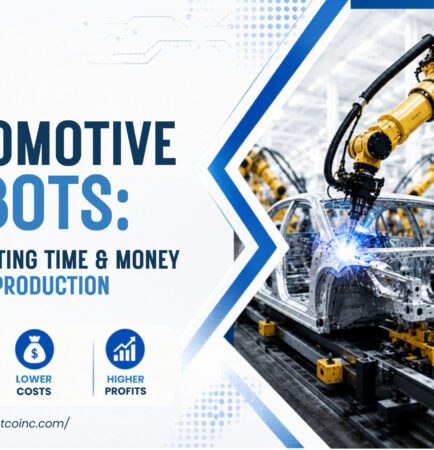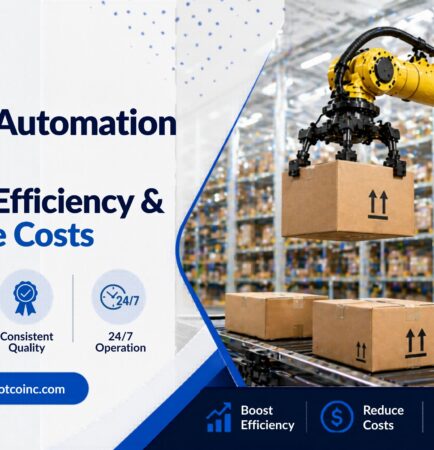



US automotive plants are under pressure. Labor costs are rising, EV retooling is expensive, and overseas competition is not slowing down. Every minute your production line runs below capacity, you lose output, money, and market position. Manufacturers are now expected to produce faster while maintaining quality and controlling operational costs. Robotco helps automotive manufacturers implement advanced robotic automation solutions that improve production efficiency, reduce downtime, and support long-term operational performance.
Vehicle manufacturing robots are no longer a luxury for large factories. They help manufacturers reduce waste, improve production speed, and protect long-term contracts. Companies that adopted automation early are already operating more efficiently, making it harder for others to compete. This blog explains where automotive robots create the biggest impact and how manufacturers can adopt automation faster and more effectively.
What Are Automotive Robots?
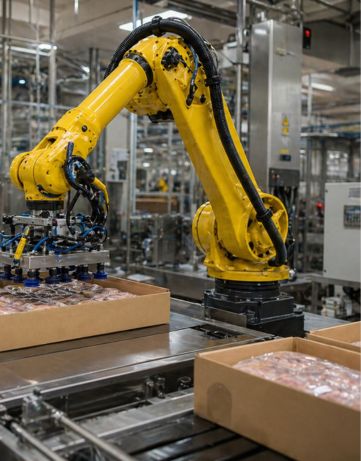
Automotive robots are programmable machines used in vehicle manufacturing plants. They help workers complete tasks that need speed, accuracy, and repeated movement.
Different types of robots are used for different production tasks:
- Articulated robots use flexible arms for welding, painting, and material handling.
- SCARA robots help with fast and accurate assembly work.
- Collaborative robots (cobots) work safely beside human workers.
- Delta robots move small parts quickly during picking and placing tasks.
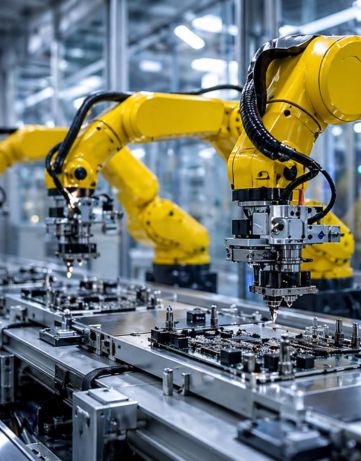
Modern automotive robots do more than basic mechanical work. Many use AI vision systems, force sensors, and real-time data to improve accuracy and performance. They support everything from heavy welding to small electronics assembly, making them important across the entire vehicle production process.
Why Your Production Line Is Losing Money
Many plant managers know their production line is losing efficiency, but the real source of the problem is not always easy to identify. Most losses come from a few common issues that slowly increase costs over time.
A) Scrap and Rework Costs
Human errors during welding and painting can become expensive very quickly. A poor weld on a structural part may require rework or complete replacement. This increases material waste, labor time, and production delays.
B) Fatigue-Related Errors
Long shifts reduce concentration and accuracy. As workers become tired, the chances of mistakes and unplanned downtime increase. Even a single production interruption can create major financial losses for a manufacturing plant.
C) Inconsistent Output Between Shifts
Production quality often changes between day and night shifts. Small differences in speed, accuracy, and process control can lead to inspection problems and warranty risks later.
This is where robotics in automotive manufacturing creates a major advantage. Robots carry out repetitive tasks at a steady pace while maintaining high precision during the entire work period. This helps manufacturers reduce waste, improve quality, and maintain stable production output.
Where Automotive Robots Add the Most Value
#1. Precision Welding and Painting
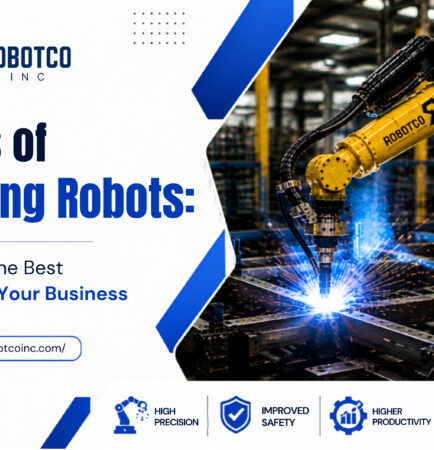
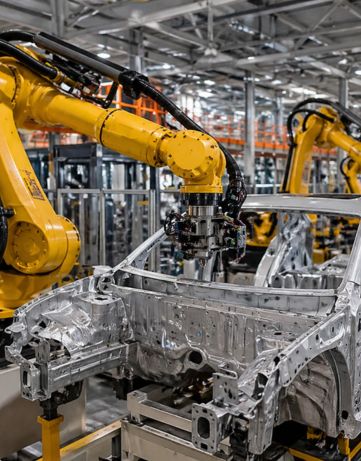
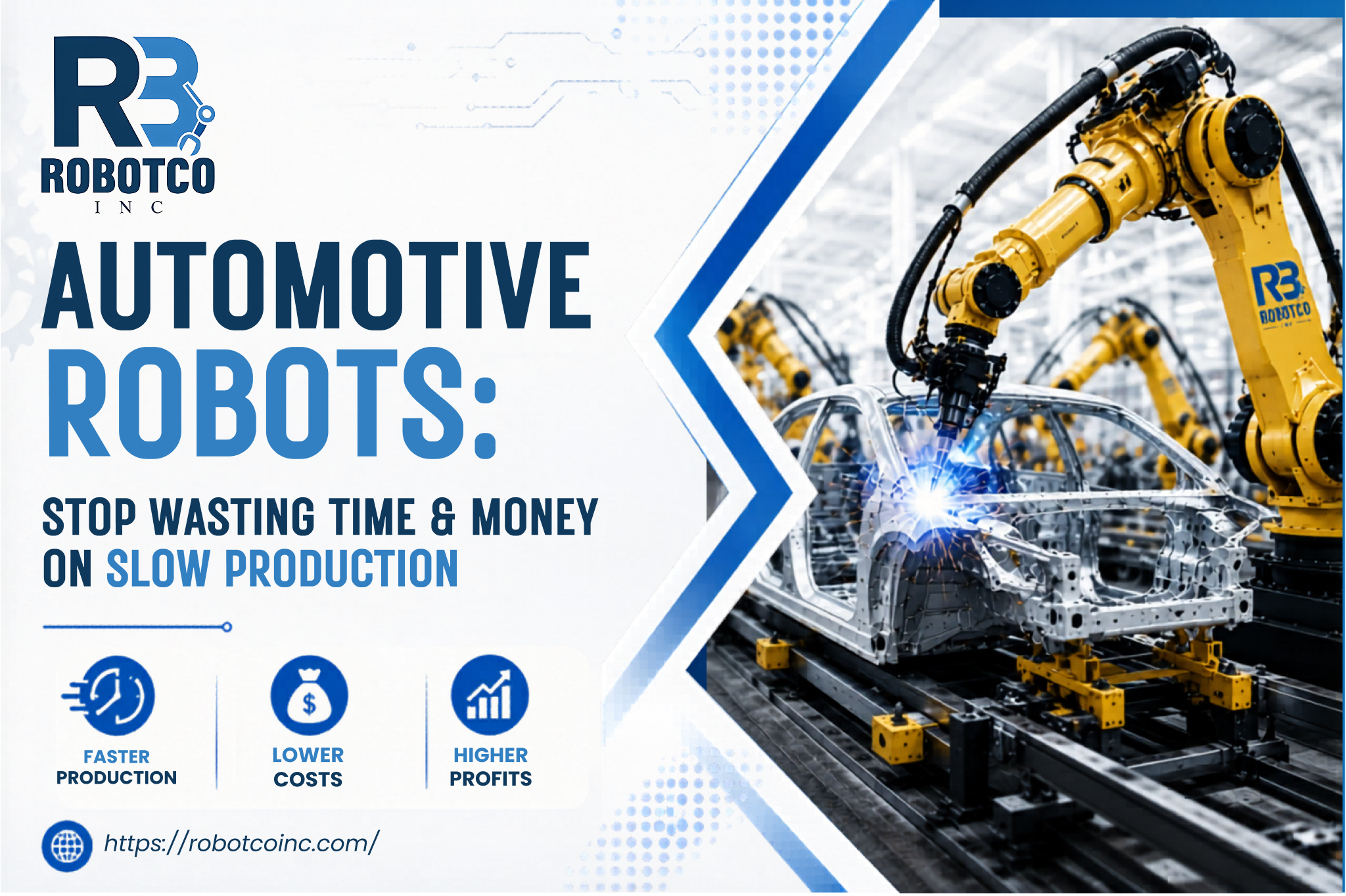
Robotic welding systems work with extremely high accuracy. They maintain the same welding angle, arc time, and movement speed throughout production. This helps manufacturers improve weld quality and reduce production errors.
Robotic paint systems also improve consistency. They apply even coating thickness and reduce overspray, which lowers paint waste and improves surface finish quality.
#2. High-Speed Assembly
Industrial robots in car manufacturing handle repetitive assembly tasks with speed and precision. Common tasks include screwdriving, fastening, clip installation, and part placement. These jobs often become tiring for workers during long production shifts.
Many robots in car factories also support continuous and overnight production. This helps manufacturers increase output and reduce delays without adding extra labor pressure.
#3. Quality Inspection With AI Vision
Modern automotive factory robots now use AI-powered vision systems for real-time inspection. They identify defects during production instead of detecting problems at the end of the line.
This helps manufacturers reduce rejection rates, improve product quality, and protect important OEM relationships.
The Cobot Advantage: Automation Is Not Just for Big Plants
Many mid-sized manufacturers still believe robots are only for large automotive plants. That is no longer true.
Automotive collaborative robots, also called cobots, are built for smaller and mid-sized operations. They work safely alongside human workers and usually require less space than traditional robotic systems. Many cobots are lightweight, easy to install, and simple to reprogram for new tasks.
This flexibility has become very important during the EV transition. Vehicle models and production requirements now change more frequently than before. A cobot can often switch to a new task within hours instead of weeks.
This helps smaller manufacturers stay competitive while adapting to changing production demands in both ICE and electric vehicle manufacturing.
1.The Math That Actually Matters
Now let us talk about the part every factory owner cares about most — profit and return on investment.
Buying automation is a big decision, so companies want to know one thing:
“Will it save money and improve production?”
In most cases, the answer is yes.
2. Direct Cost Savings
Using car industry robots helps factories reduce many daily expenses.
- Lower labor turnover costs because robots do not quit or take leave
- Fewer workplace injuries, which reduces insurance and compensation costs
- Less material waste and rework due to better accuracy
3. Indirect Business Benefits
The benefits are not only about saving money. Factories also produce more in less time.
- Higher production output during every shift
- Overnight production without extra staffing costs
- Consistent product quality that helps keep OEM contracts secure
One major advantage of automotive manufacturing robots is consistency. They perform the same task with the same accuracy every time. This helps manufacturers avoid costly mistakes and production delays.
Most automotive factories recover their investment within 12 to 24 months. After that, the extra production and cost savings directly improve profit margins.
Choosing the Right Automation Partner
Buying a robot is easy. Building a successful automation system is the real challenge. Many manufacturers think the robot alone will solve production problems. But that is not true. A robot is only one part of the system.
You also need:
- Proper line integration
- Programming support
- Operator training
- Fast technical support after installation
Without these things, even an expensive robot can create production problems.
This is where many companies make mistakes. They focus only on the lowest price and ignore long-term support. At first, the cheaper option may look smart. But later, poor integration and downtime can become very costly.
A badly maintained system can slow production, increase errors, and stop the entire line. In many cases, the downtime costs more than the robot itself.
That is why choosing the right automation partner matters as much as choosing the robot.
Before making a decision, ask these important questions:
- Do you provide full line integration or only the robot?
- What kind of support do you offer after installation?
- Can you train our operators on-site?
- How quickly can your team respond during downtime?
The answers will help you understand whether the company is selling a machine or offering a complete solution.
Read More: Automated Assembly Line Guide: ROI, AI & Equipment
Conclusion: The Industry Is Changing Fast
Automation is no longer just an option in automotive manufacturing. Many businesses are already using robotic systems to improve speed, reduce waste, and increase profits. Companies that invested in automation earlier are now operating faster with fewer errors and lower operating costs, while others still struggle with downtime, labor shortages, and inconsistent quality.
The real question is not whether to automate, but how much money is being lost by waiting. Modern automation helps businesses run smarter, improve consistency, and keep production moving efficiently.
If your business is facing production delays, scrap, or rising labor costs, now is the right time to act. Contact Roboticinc today and discover how the right automation solution can improve your production line and long-term profitability.
Frequently Asked Questions
#1. How long does it take to install vehicle assembly robots on an existing production line?
The installation time depends on the type of robot and the task involved. In most cases, a standard robotic cell takes around two to six weeks to install. Smaller cobot systems can often be set up much faster, sometimes within a few days for simple applications.
#2. Do factories need to stop production during installation?
Not always. A skilled automation partner can plan the installation around your production schedule. Many companies install robotic systems during maintenance shutdowns or off-production hours to avoid major disruptions.
#3. Are robots suitable for low-volume production?
Yes, especially collaborative robots or cobots. They are flexible and easy to reprogram. This makes them a good choice for factories that produce different vehicle models or smaller production batches.
#4. Which tasks are best for automotive production robots?
Robots work best in repetitive and high-precision tasks such as:
- Welding
- Painting
- Assembly
- Material handling
- Quality inspection
These jobs often involve fatigue and repetitive motion for workers. Robots help improve speed, accuracy, and consistency.
#5. Does a factory need high production volume to justify robot investment?
Not necessarily. Modern cobots are more affordable and flexible than traditional systems. Even smaller manufacturers can see strong returns if robots help reduce scrap, rework, downtime, and labor-related delays. The real value comes from improving efficiency and maintaining consistent production quality.