

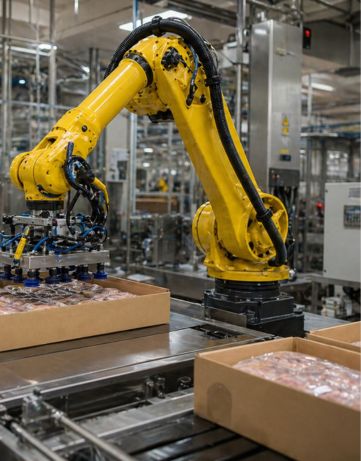

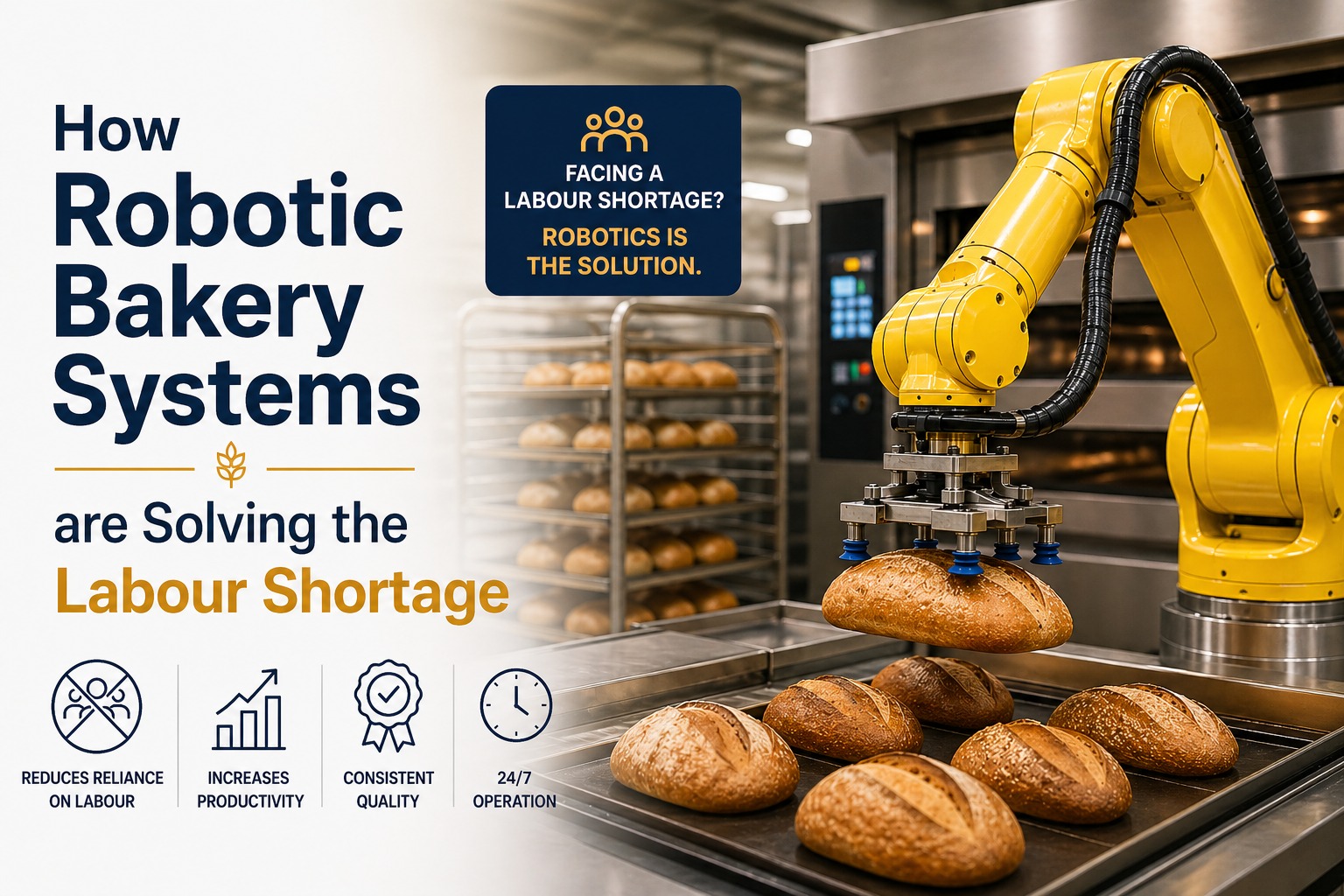
The baking industry is changing faster than ever. What once depended entirely on skilled hands and long hours is now evolving into a system powered by precision, consistency, and smart machines. The shift from traditional baking to modern production has not happened overnight. It has grown out of rising global demand, labour shortages, and the need for consistent quality across large volumes.
Today, Robotic Bakery Systems are no longer limited to large industrial plants. Even mid-sized bakeries are exploring ways to streamline operations without losing product quality. This transformation is widely covered in news, where the focus is no longer just on machines but on how technology improves efficiency while supporting human creativity.
The real change lies in balance. Bakeries are not replacing people; they are enhancing processes. Bakery Automation helps reduce repetitive work, improve hygiene, and ensure consistency. As a result, bakeries can scale production while maintaining standards. This shift marks the beginning of a new era where tradition meets innovation.
Industrial Bakery News: What’s Shaping the Modern Production Line
Modern bakeries now operate with a level of flexibility that was not possible before. One of the biggest updates in industrial bakery news is the rise of modular production systems. These systems allow bakeries to produce multiple product types — such as bread, pastries, and rolls — on the same line without major changes.
Sustainability also plays a major role in shaping current trends. Energy-efficient ovens, waste reduction systems, and smart ingredient usage are becoming standard. Bakery Automation Systems help bakeries reduce overproduction and manage resources more effectively. This not only lowers costs but also supports environmental goals.
Another major trend is the integration of Smart Automation in Bakery operations through advanced monitoring systems. These systems track every stage of production, from mixing to packaging. Operators can identify issues quickly and make adjustments in real time. This level of control improves both quality and productivity.
Flexibility is the key driver behind these changes. Bakeries no longer want rigid systems. They need solutions that adapt to changing demands. Whether it is seasonal products or new recipes, Robotic Bakery Systems allow quick adjustments without stopping production.
The Anatomy of a Robotic Bakery: From Dough to Delivery
A robotic bakery operates as a fully integrated system where every step connects seamlessly. The process begins with automated dough handling and precision dosing. Machines measure ingredients with high precision, ensuring every batch meets the same standard. This eliminates human error and improves consistency.
The next stage is fermentation. Advanced sensors monitor temperature and humidity to create the perfect environment for dough development. This step is critical because even small variations can affect the final product. Robotic Bakery Systems ensure that every batch rises under ideal conditions.
Shaping and scoring follow. Robots in the Bakery handle dough gently while maintaining exact shapes and patterns. This process allows bakeries to produce uniform products at high speed without compromising quality.
Finally, the products move to baking and packaging. Automated Bakery Equipment maintains consistent heat distribution, while packaging systems ensure hygiene and efficiency. The entire flow works as one connected system, reducing delays and improving output.
This technical structure shows how automation does not remove craftsmanship. Instead, it standardizes the process, allowing bakers to focus on innovation and product development.
Understanding the Deployment: Who, When, and Where of Baking Technology
Who is Technology Baking For?
Many people believe automation is only for large corporations, but that is no longer true. Bakery Robotics Solutions today serve small bakeries, local shops, and growing businesses alike. Affordable and scalable solutions allow even smaller operations to adopt automation step by step.
For large manufacturers, automation ensures high-volume production with consistent quality. For smaller bakeries, it reduces manual workload and improves efficiency. The accessibility of technology is expanding, making it a practical option for businesses of all sizes.
When Should Technology Baking Be Implemented?
Timing plays a crucial role in adopting automation. If a bakery struggles with consistency, industrial baking labor solutions, or increasing demand, it is the right time to consider automation.
Early adoption can provide a competitive advantage. However, even established bakeries can benefit by upgrading specific parts of their process. The key is to identify areas where automation can deliver the most value.
Where Is Technology Baking Making the Most Impact?
Automation delivers the greatest results in high-volume and repetitive processes. Industrial Baking Robotics & Automation shows the most impact in dough handling, shaping, and packaging. These areas require precision and speed, making them ideal for automation.
Packaging, in particular, benefits from automation because it ensures hygiene and reduces contamination risks. Sorting and quality checks also improve significantly with automated systems. By focusing on these areas, bakeries can achieve better efficiency without changing their entire operation.
This structured approach helps businesses understand how and where to implement automation effectively.
Can Machines Keep the Artisan Touch? The Baking Automation Debate
One of the biggest concerns in the industry is whether machines can replace the skill of a master baker. The answer lies in understanding the role of Robotic Bakery Systems. Automation handles repetitive and time-consuming tasks, but creativity remains with humans.
Machines ensure consistency, but they do not create recipes or innovate flavors. Bakers still control the artistic side of production. They decide ingredients, textures, and presentation. Automation simply supports these decisions by executing them with precision.
This balance allows bakeries to scale without losing identity. Instead of replacing craftsmanship, automation protects it by removing manual strain and reducing errors. The result is a system where quality and efficiency coexist.
Read More: How Collaborative Robots Help Small-Scale Manufacturing Businesses
The Operational Impact of Baking Automated Systems
The Reliability of Being Baking Automated
Consistency defines success in modern baking. Robotic Bakery Systems deliver the same results every time. Machines do not get tired, and they do not vary in performance. This ensures uniform product quality across every batch.
Automation also improves safety and hygiene. Minimal human contact reduces contamination risks, while controlled environments maintain product integrity. These advantages make automation essential for maintaining standards in competitive markets.
Future Outlook: AI in the Bakery
The future of baking lies in intelligent systems. Insights from recent bakery automation trends and industry updates suggest that AI will play a bigger role in predicting demand and optimizing production. Bakeries will produce exactly what they need, reducing waste and improving efficiency.
Smart Maintenance in Modern Bakeries
Automation does not stop at production — it also improves how bakeries maintain their equipment. Modern systems use sensors to monitor machine performance in real time. These sensors detect small changes in vibration, temperature, or speed that may indicate a potential issue.
Instead of waiting for a breakdown, operators can fix problems early. This approach reduces downtime and keeps production running smoothly. Maintenance becomes predictable rather than reactive.
For bakery owners, this means fewer interruptions and more reliable output. It also lowers repair costs because small issues are easier to fix than major failures. Smart maintenance ensures that automated systems deliver consistent performance every day.
Customization and Product Innovation
Automation is not just about speed — it also supports creativity. Modern bakery systems allow quick adjustments to recipes, shapes, and sizes. This flexibility helps bakeries respond to changing customer preferences without slowing production.
For example, a bakery can switch from standard bread to specialty items like gluten-free or flavored products with minimal setup changes. Digital controls make it easy to adjust ingredients and processes.
This capability allows businesses to experiment and innovate. Instead of producing the same products every day, bakeries can introduce new items and stay competitive. Automation supports both efficiency and creativity at the same time.
Scaling Bakery Operations with Confidence
Growth is a major challenge for many bakeries. As demand increases, maintaining quality becomes difficult with manual processes. Automation provides a solution by enabling consistent production at higher volumes.
With the right systems in place, bakeries can expand operations without compromising standards. They can handle larger orders, enter new markets, and meet customer expectations more effectively.
Automation also simplifies workforce management. Instead of increasing labor, businesses can rely on machines for repetitive tasks. This allows teams to focus on quality control and innovation.
Scaling becomes more manageable and less risky. With automation, bakeries can grow confidently while maintaining efficiency and product consistency.
Market Demand and Changing Consumer Expectations
Consumer demand is evolving, and bakeries must adapt quickly to stay competitive. Recent bakery automation news highlights how businesses are using automation to respond faster to changing tastes and seasonal trends. From customized products to faster delivery cycles, automation supports flexibility. Bakeries that align production with consumer expectations can maintain quality while scaling efficiently in a dynamic market.
Conclusion
The evolution of baking is clear. Technology is not replacing tradition; it is enhancing it. The future belongs to bakeries that combine innovation with craftsmanship. Businesses that adapt today will lead tomorrow.
Companies like Robotcoinc are helping bakeries make this transition with smart, scalable automation solutions designed for real-world production needs. By bridging technology and craftsmanship, Robotcoinc supports bakeries in building efficient, future-ready operations without compromising quality.